

Colorado's high-altitude reservoirs offer some of the most scenic personal watercraft riding in the country. From Chatfield State Park to Blue Mesa Reservoir, thousands of riders hit the water each summer on Wave Runners and other PWCs. But here's something that surprises many Colorado boaters: the state doesn't require you to carry insurance on your personal watercraft. That doesn't mean you should skip it.
I've seen too many riders assume their homeowners policy covers their Wave Runner, only to discover a massive gap when something goes wrong. A collision at Horsetooth Reservoir, a theft from your driveway, a passenger injury at Lake Granby: these situations can cost tens of thousands of dollars, and many standard policies won't cover them. Understanding what coverage you actually need for Wave Runner insurance in Colorado protects both your finances and your peace of mind.
The reality is that PWC accidents happen more often than people expect. Of the 85,000 registered boats in Colorado, 44 get into accidents each year, causing an average of $1,700 in damage per incident. That might sound manageable until you factor in liability claims, medical bills, or a totaled watercraft. The right insurance policy transforms a potential financial disaster into a minor inconvenience. Let's break down exactly what coverage makes sense for Colorado riders and how to find a policy that fits your situation without overpaying.
Understanding Wave Runner Insurance Requirements in Colorado
Colorado State Laws and PWC Regulations
Colorado law does not require PWC insurance to operate on public waterways. You can legally ride your Wave Runner across any state reservoir without carrying a single dollar of coverage. However, just because something is legal doesn't make it smart.
What Colorado does regulate is operator age and safety training. As of June 1, 2024, operators must be at least 18 years old to operate a PWC unless they've completed a boating safety course. Riders between 14 and 17 can operate after completing an approved course. These requirements exist because PWCs are powerful machines that demand respect and skill.
Many marinas and private lakes require proof of insurance before allowing access. If you're planning to use your Wave Runner at various locations throughout Colorado, carrying insurance eliminates access headaches and protects you from unexpected liability.
Why Homeowners Insurance Often Falls Short
Here's where riders get burned: they assume their homeowners or renters policy covers their PWC. Most standard homeowners policies provide extremely limited watercraft coverage, typically only for boats with small motors under 25 horsepower. Wave Runners and other PWCs routinely exceed 100 horsepower, putting them well outside this coverage.
Even when homeowners policies do provide some coverage, liability limits are often inadequate. A serious injury claim can easily exceed $100,000, and a standard homeowners policy might only cover $10,000 to $25,000 for watercraft incidents. The gap between what your policy covers and what you actually owe comes directly from your pocket. A dedicated PWC policy closes this gap completely.


By: Brian J. Cook
Founder & Managing Partner of The Insurance Loft
Essential Coverage Types for Personal Watercraft
Liability Protection for Bodily Injury and Property Damage
Liability coverage is the foundation of any solid Wave Runner policy. This protects you when you're responsible for injuring someone or damaging their property. At Colorado's busy summer reservoirs, collisions happen: inexperienced riders, crowded waters, and wake zones create constant risk.
A good liability policy should include at least $100,000 in bodily injury coverage per person and $300,000 per occurrence. Property damage coverage of $50,000 handles situations where you collide with another boat, dock, or structure. Basic liability PWC coverage can start around $100 to $150 annually, making this protection remarkably affordable for the risk it eliminates.
Physical Damage: Collision and Comprehensive Options
Collision coverage pays to repair or replace your Wave Runner after an accident, regardless of fault. Comprehensive coverage handles non-collision damage: theft, vandalism, fire, storm damage, and similar events. Given that a new Wave Runner can cost $15,000 to $20,000, protecting your investment makes financial sense.
When choosing physical damage coverage, pay attention to the valuation method. Agreed value policies pay a predetermined amount if your PWC is totaled, while actual cash value policies deduct depreciation. For newer watercraft, agreed value policies prevent disputes and ensure adequate replacement funds.
Uninsured Watercraft and Medical Payments Coverage
Not every boater on Colorado waters carries insurance. Uninsured watercraft coverage protects you when an uninsured operator causes an accident. This coverage pays for your injuries and damage when the responsible party can't.
Medical payments coverage, sometimes called MedPay, covers medical expenses for you and your passengers regardless of fault. This coverage kicks in immediately, paying bills while liability questions get sorted out. For families who frequently ride together, medical payments coverage provides crucial protection.
Specialized Add-ons for High-Altitude Boating
Towing and Roadside Assistance for Remote Reservoirs
Colorado's best PWC destinations often sit miles from the nearest town. Blue Mesa Reservoir is over an hour from Grand Junction. Spinney Mountain Reservoir requires navigating remote mountain roads. When your trailer breaks down or your Wave Runner won't start, you need reliable assistance.
Towing and roadside assistance coverage handles on-water towing to the nearest launch ramp plus roadside assistance for your tow vehicle and trailer. This coverage typically costs $20 to $50 annually and can save you hundreds in emergency tow fees. For riders who explore Colorado's more remote waterways, this add-on pays for itself quickly.
Wreckage Removal and Fuel Spill Liability
If your Wave Runner sinks or becomes disabled, you're legally responsible for removing it from the water. Wreckage removal coverage pays these costs, which can run several thousand dollars depending on depth and location. Colorado's clear mountain reservoirs have strict environmental protections, and leaving a disabled watercraft isn't an option.
Fuel spill liability covers cleanup costs if your PWC leaks fuel into the water. Environmental regulations make fuel spill cleanup expensive, and this coverage prevents a mechanical failure from becoming a financial catastrophe. Most comprehensive PWC policies include both coverages, but verify before purchasing.
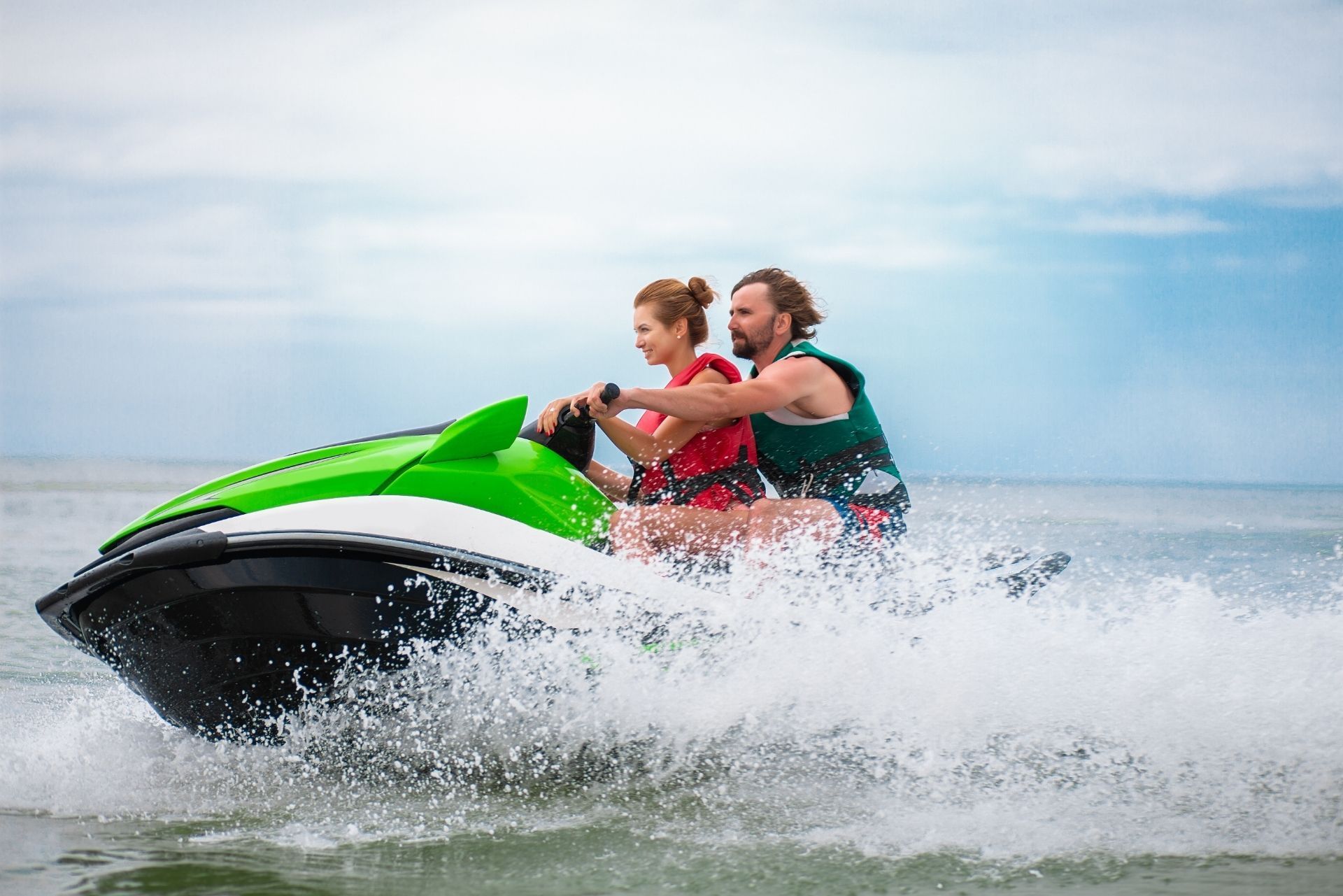
Impact of PWC Performance and Engine Specs
Insurance companies price policies based on risk, and more powerful watercraft present more risk. A 60-horsepower Wave Runner costs less to insure than a 180-horsepower supercharged model capable of 70 mph. Engine displacement, top speed, and overall performance all factor into your premium.
| Factor | Lower Premium | Higher Premium |
|---|---|---|
| Engine Power | Under 100 HP | Over 150 HP |
| Top Speed | Under 50 mph | Over 65 mph |
| Age of PWC | 5+ years old | Brand new |
| Storage | Locked garage | Outdoor/uncovered |
| Usage | Occasional | Daily/rental |
Your PWC's age also matters. Newer watercraft cost more to insure because replacement costs are higher. A five-year-old Wave Runner with some wear typically carries lower premiums than a current model year purchase.
Boater Safety Courses and Experience Discounts
Completing a boater safety course can reduce your premiums by 10% to 15% with many insurers. These courses teach navigation rules, safety procedures, and emergency response: knowledge that makes you a safer operator and a better insurance risk.
Experience matters too. Riders with clean boating records and multiple years of PWC ownership often qualify for loyalty and experience discounts. When working with an independent agency like The Insurance Loft, your advisor can identify which carriers offer the best discounts for your specific situation and compare options across multiple companies.
Colorado's PWC season runs roughly May through September, depending on elevation and weather. That means your Wave Runner sits unused for six to seven months each year. Storage presents its own risks: theft, rodent damage, freeze damage, and vandalism don't take the winter off.
Many insurers offer lay-up periods that reduce premiums during storage months while maintaining comprehensive coverage. You sacrifice collision coverage when the watercraft isn't in use but keep protection against theft and damage. This approach can reduce annual premiums by 20% to 30%.
Proper winterization matters for insurance purposes too. Policies may require specific storage conditions or winterization procedures. Failing to properly winterize can void coverage for freeze-related damage. Review your policy requirements before storing your Wave Runner for the season.
How to Choose the Right Policy for Your Wave Runner
Finding the right coverage starts with honest assessment. How often do you ride? Where do you go? Who rides with you? A family that takes occasional trips to Chatfield needs different coverage than a rider who hits the water every weekend at multiple reservoirs.
More extensive PWC coverage typically ranges between $200 and $450 per year, which breaks down to less than a dollar per day for comprehensive protection. Compare that cost against the value of your watercraft and the potential liability exposure, and insurance becomes an obvious choice.
Working with an independent agency gives you access to multiple carriers and unbiased recommendations. The Insurance Loft works with carriers including Nationwide, Travelers, Progressive, and Hagerty, comparing options to find coverage that matches your needs and budget. Your licensed advisor learns your specific situation rather than pushing a one-size-fits-all policy.
Frequently Asked Questions
Does my auto insurance cover my Wave Runner while trailering? Your auto liability coverage typically extends to accidents while towing, but physical damage to the PWC itself requires separate coverage. A dedicated policy protects the watercraft on the road and on the water.
Can I get coverage for racing or competitive use? Standard recreational policies exclude racing and competitive events. If you participate in organized competitions, you'll need specialized coverage or event-specific policies.
What happens if someone borrows my Wave Runner and causes an accident? Most policies cover permissive users, meaning anyone you allow to operate your PWC is covered under your liability protection. Verify this with your specific policy.
Are accessories and modifications covered? Standard policies cover factory-installed equipment. Aftermarket accessories like upgraded speakers, GPS units, or performance modifications may require additional coverage or scheduled endorsements.
How quickly can I get coverage? Most policies can be bound same-day, giving you immediate proof of insurance for marina access or peace of mind before your next ride.
Making the Right Coverage Decision
The right Wave Runner insurance policy protects your investment, shields your assets from liability claims, and lets you enjoy Colorado's incredible waterways without worry. Whether you're exploring remote mountain reservoirs or spending summer weekends at popular state parks, adequate coverage transforms potential disasters into manageable situations.
Don't assume your current policies cover your PWC, and don't skip insurance just because Colorado doesn't require it. The cost of proper coverage is minimal compared to the financial exposure of riding uninsured. Contact The Insurance Loft to speak with a licensed advisor who can compare options across multiple carriers and find the right coverage for your specific needs.
ABOUT THE AUTHOR:
Brian J. Cook
I'm Brian J. Cook, co-founder and Managing Partner of The Insurance Loft, an independent insurance agency headquartered in Greenwood Village, Colorado. With a client-first approach to personal insurance, I help Colorado homeowners, drivers, and families find the right coverage — without the limitations of working with a single-carrier agent.
COVERAGE FOR YOUR LIFE
Personal Insurance Plans That Protect What Matters Most
From your home and car to your family and pets — we cover it all.
GET THE ANSWERS YOU NEED
Common Questions About The Insurance Loft
We believe informed clients make better coverage decisions. Here are the questions we hear most often.
What does it mean to be an independent insurance agency?
An independent insurance agency like The Insurance Loft is not tied to a single insurance company. We are licensed to work with multiple carriers — including Nationwide, Travelers, Progressive, Safeco, Chubb, and others — so we can compare options and find the best policy for your needs. When you work with a captive agent, you only see what that one company offers. When you work with us, you see the full market.
This independence also means we represent you, not the carrier. When a claim arises or your coverage needs to change, your advisor advocates for your interests — not the insurance company's bottom line. That is the core of what makes The Insurance Loft different.
Where is The Insurance Loft located and who do you serve?
The Insurance Loft is headquartered in Greenwood Village, Colorado, in the Denver Tech Center area. We serve individuals and families throughout Colorado — from the Denver Metro and Front Range to Colorado Springs, Boulder, Fort Collins, mountain communities, and beyond. Our office is conveniently located at 5990 Greenwood Plaza Blvd, Ste 270, Greenwood Village, CO 80111.
Whether you are a longtime Colorado resident or just moved to the state, The Insurance Loft can help you find the right personal insurance coverage. Our advisors understand Colorado's specific risks and regulations, and they know which carriers offer the best coverage options for your area. Call us at 800-409-9790 or schedule a call online to get started.
What types of insurance does The Insurance Loft offer?
We offer a full range of personal and commercial insurance products. On the personal side, we cover home, auto, renters, life, motorcycle, umbrella, and pet insurance. For businesses, we provide general liability, commercial property, workers compensation, professional liability, business auto, and specialty coverage for industries like construction, food and beverage, brewery, and cannabis operations.
We also offer surety bonds for businesses that require them. Our goal is to be your single resource for every insurance need — personal or commercial — throughout your life and the life of your business. If you are unsure what coverage you need, schedule a call and an advisor will walk you through your options at no cost.
What carriers does The Insurance Loft work with?
The Insurance Loft partners with more than 19 trusted insurance carriers to give clients access to a wide range of options. Our featured carrier partners include Nationwide, Travelers, Progressive, Safeco Insurance, Chubb, and Hagerty Insurance for collector vehicles. Each carrier brings different strengths, pricing structures, and coverage specialties, which is why having access to multiple companies matters.
Because we work with a diverse group of carriers, we are not pressured to place policies with any single company. Your advisor reviews your situation, identifies which carriers best match your needs, and presents your options clearly. This process consistently delivers better coverage at competitive prices compared to going directly to a single insurance company.
How does The Insurance Loft handle the claims process ?
When you need to file a claim, your dedicated Insurance Loft advisor is your first call. We provide claims support through our Member Services team and guide you through the process with your carrier. You will not be left to figure it out alone. Our advisors help you understand what your policy covers, what documentation is needed, and what to expect from the timeline.
You can also access claims support directly through our Member Services portal at theinsuranceloft.com. Our goal is to make the claims process as clear and stress-free as possible so you can focus on recovery. For urgent claims assistance, contact our Customer Care team at 800-409-9790 during business hours, Monday through Friday, 9 AM to 6 PM.
Why should I review my insurance coverage every year?
Your life changes constantly — and your insurance should change with it. A new home, a new vehicle, a renovation, a new employee, a business expansion, or a change in your income can all affect how much coverage you need. Reviewing your policy annually helps make sure you are not paying for coverage you no longer need, and that you are not underinsured in areas where your exposure has grown.
The Insurance Loft advisors proactively reach out at renewal time to review your current policies and flag anything that needs attention. Major life events like buying a home, starting a business, getting married, or having children are all good reasons to schedule an earlier review. Contact your advisor or call 800-409-9790 to set up a coverage review at any time.
INSURANCE KNOWLEDGE, MADE SIMPLE
Learn From Our Resource Center
Practical answers to real insurance questions — written by the advisors who help clients every day.



CONTACT US
Phone Number: 1-800-409-9790