

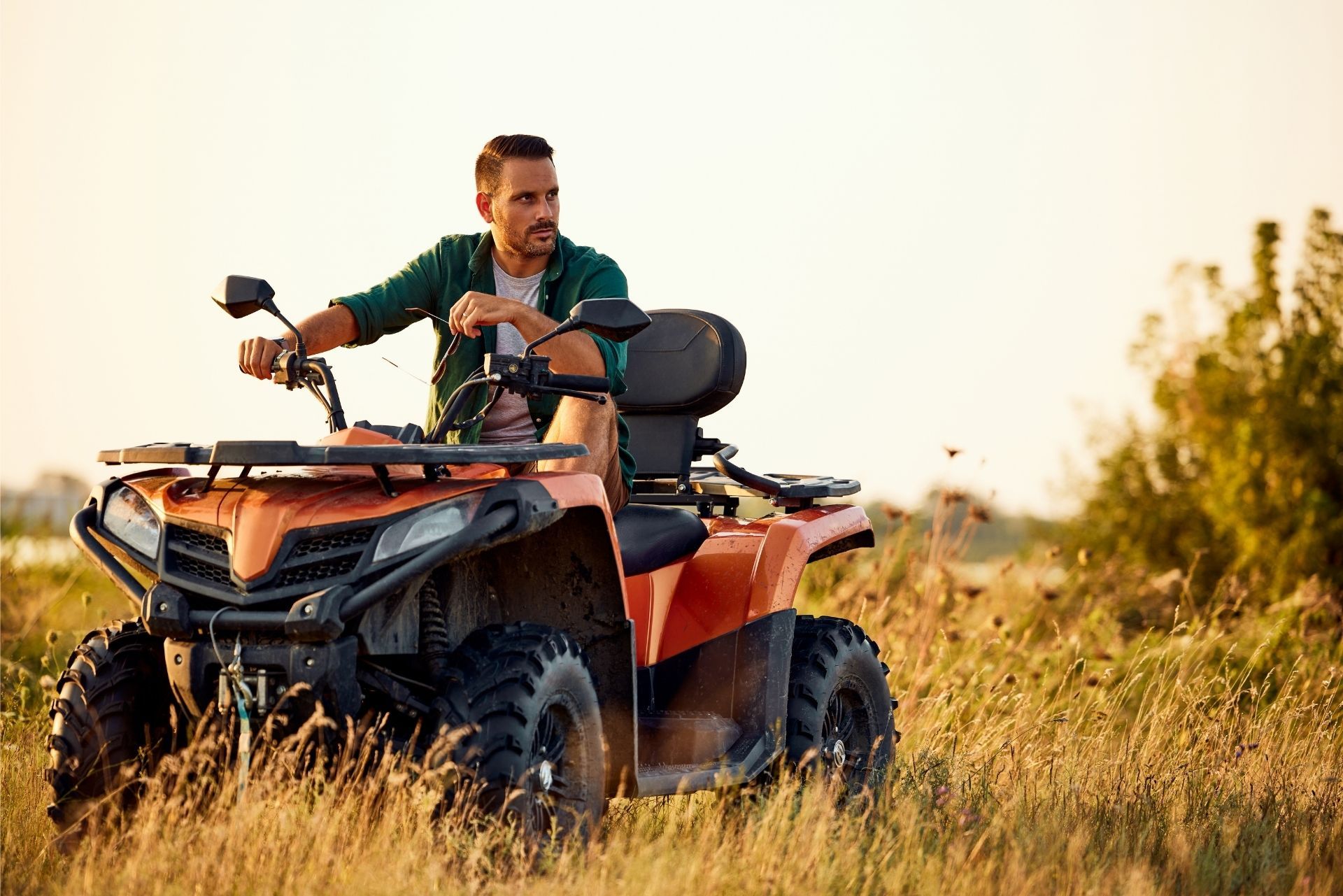
Colorado's backcountry trails draw thousands of ATV and UTV enthusiasts each year, from the technical rock gardens of Moab-adjacent routes to the alpine meadows above Silverton. But here's what catches many riders off guard: that shiny new side-by-side sitting in your garage probably isn't covered by your auto policy, and your homeowner's insurance likely won't help much either if something goes wrong on the trail. Getting proper 4-wheeler insurance in Colorado means understanding a patchwork of state requirements, county-specific rules, and coverage options that vary wildly depending on where and how you ride.
The stakes are real. A single rollover on a rocky switchback can total a $25,000 UTV in seconds. Medical evacuations from remote trails routinely run $10,000 or more. And if you cause property damage or injure another rider, you're personally liable without the right protection in place.
What makes Colorado particularly tricky is the mix of federal land, state parks, and county regulations that govern off-road vehicles. Some areas require nothing beyond registration. Others, like Hinsdale County's popular Alpine Loop, mandate liability insurance and a valid driver's license just to operate. Knowing what you need before you hit the trailhead saves headaches and potential fines.
This guide breaks down exactly what coverage you need, what it costs, and how to avoid the gaps that leave riders exposed when things go sideways.
Understanding Colorado ATV and UTV Insurance Requirements
Colorado's approach to off-road vehicle insurance sits somewhere between hands-off and surprisingly strict, depending on your location and intended use.
State Registration and Liability Minimums
Every ATV owner in Colorado must register and number their vehicle through the state. Registration runs about $25.25 annually and gives you the OHV sticker required for legal trail access on public lands. But registration doesn't equal insurance, and Colorado doesn't mandate statewide liability coverage for off-road-only vehicles.
That said, individual counties and specific trails often impose their own requirements. Hinsdale County stands out as one example, requiring proof of liability insurance for ATV operation within its boundaries. Given that this county includes some of Colorado's most popular high-altitude trails, many riders need coverage whether they initially planned on it or not.
The Difference Between On-Road and Off-Road Use
The insurance picture changes dramatically once your 4-wheeler touches pavement. Colorado allows street-legal ATVs and UTVs on certain roads, but the moment you're road-legal, you're subject to the same liability minimums as any other motor vehicle: $25,000 per person for bodily injury, $50,000 per accident, and $15,000 for property damage.
Even if you never plan to cross a public road, many trails require brief highway stretches between sections. That five-minute road crossing suddenly means you need full liability coverage. Smart riders carry year-round coverage rather than gambling on technicalities.

By: Brian J. Cook
Founder & Managing Partner of The Insurance Loft
Essential Coverage Types for Rocky Mountain Terrain
Standard auto policies almost never extend to off-road vehicles, and homeowner's policies typically limit coverage to your property only. Specialized ATV insurance fills these gaps with protection designed for trail conditions and off-road risks.
Collision and Comprehensive Protection
Collision coverage pays for damage when you hit something or roll your machine. Comprehensive handles everything else: theft, vandalism, fire, flood, and wildlife encounters. In Colorado, where elk crossings and sudden hailstorms are part of the riding experience, comprehensive coverage earns its keep.
Annual premiums for ATV insurance in Colorado typically range from $100 to $400, depending on your machine's value, your riding history, and chosen coverage limits. Higher-value UTVs with turbo engines and premium suspensions naturally cost more to insure, but the protection becomes proportionally more important.
Medical Payments for Trail Injuries
Trail accidents happen far from hospitals. Medical payments coverage, sometimes called MedPay, covers immediate medical expenses for you and your passengers regardless of fault. This matters because your health insurance might not cover injuries sustained during recreational vehicle use, or might impose significant out-of-pocket costs.
Coverage limits typically range from $1,000 to $25,000 per person. Given Colorado's remote trail locations and the cost of helicopter evacuations, riders with families or regular passengers should consider higher limits.
Uninsured Off-Road Vehicle Coverage
Not everyone on the trail carries insurance. When an uninsured rider causes an accident that injures you or damages your machine, uninsured motorist coverage steps in. This protection mirrors what you'd carry for highway driving but applies specifically to off-road incidents.
The coverage also protects against hit-and-run scenarios, which happen more often than you'd expect on crowded weekend trails where riders may not stop after contact.
Specialized Add-Ons for Colorado Adventurers
Basic coverage handles most situations, but Colorado's terrain and riding culture create unique risks worth addressing with targeted add-ons.
Custom Parts and Equipment Coverage
That winch, light bar, upgraded suspension, and custom wheels probably cost thousands beyond your machine's base price. Standard policies typically cap accessory coverage at $1,000 to $3,000, leaving expensive modifications unprotected.
Custom parts and equipment coverage, sometimes called CPE, insures your aftermarket investments at agreed-upon values. Document your upgrades with receipts and photos when purchasing coverage. After a total loss, you'll be glad you can prove what was installed.
| Coverage Type | What It Covers | Typical Limits |
|---|---|---|
| Standard Accessories | Factory-installed equipment | Included in base value |
| Basic CPE | Aftermarket parts | $1,000 - $3,000 |
| Extended CPE | Full custom builds | $5,000 - $20,000+ |
Emergency Roadside Assistance and Towing
Breaking down on a remote Colorado trail presents challenges that roadside assistance in urban areas never faces. Specialized off-road towing coverage handles recovery from locations standard tow trucks can't reach, including winch-outs from mud, snow, or precarious positions.
Working with an independent agency like The Insurance Loft gives you access to carriers offering genuine off-road recovery coverage rather than the limited roadside assistance bundled with standard policies. The difference between a covered $2,000 recovery and paying out of pocket matters when you're stuck 15 miles from the nearest road.
Factors Influencing Your 4-Wheeler Insurance Rates
Insurance companies assess risk based on predictable factors. Understanding what moves your premium helps you make informed decisions about coverage and potential savings.
Vehicle Type and Engine Displacement
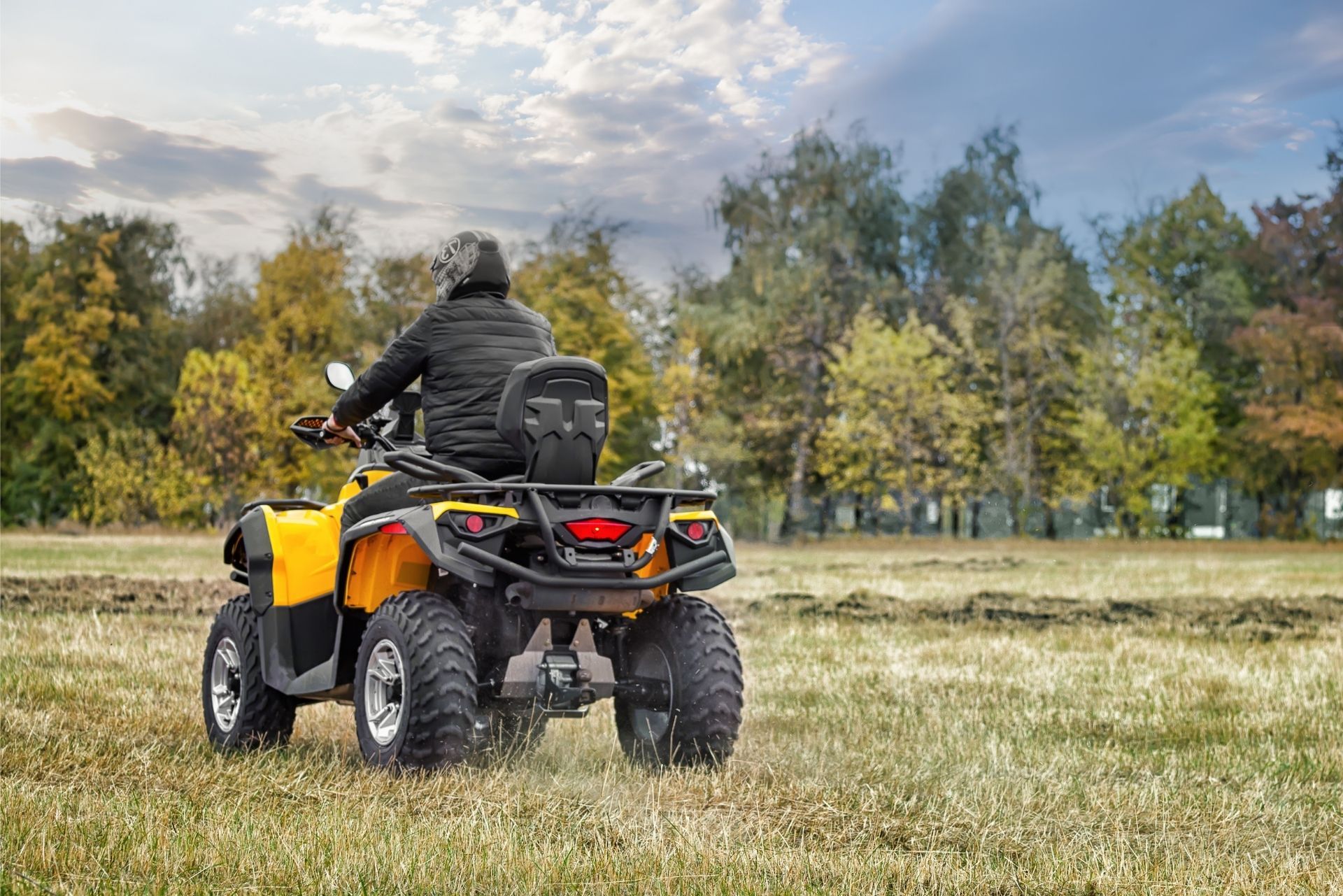
A 250cc youth ATV costs far less to insure than a 1000cc turbo side-by-side. Engine size correlates with speed, power, and accident severity. Sport ATVs designed for aggressive riding carry higher premiums than utility models built for work applications.
Vehicle age matters too. Newer machines cost more to repair or replace, driving premiums up. But older machines without modern safety features may also see higher rates in some cases.
Consider these typical rate factors:
- Engine displacement under 400cc: lower rates
- Sport-oriented suspension and handling: moderate increase
- Turbo or supercharged engines: significant increase
- Multi-passenger capacity: moderate increase
- Safety Courses and Multi-Policy Discounts
Completing an ATV safety course through the ATV Safety Institute or similar organizations can reduce premiums by 10% to 15% with many carriers. Colorado doesn't require safety certification for adult riders, but the training pays dividends in both insurance savings and actual riding competence.
Bundling your 4-wheeler coverage with existing auto, home, or other recreational vehicle policies often yields the biggest savings. The Insurance Loft works with carriers like Nationwide, Progressive, and Safeco who offer multi-policy discounts that can offset much of your ATV premium cost.
Colorado law requires reporting ATV accidents that cause significant property damage, hospitalization, or death. Beyond legal requirements, proper documentation protects your claim.
Photograph everything at the scene: vehicle damage, trail conditions, any other vehicles involved, and visible injuries. Collect contact information from witnesses. Note the exact location using GPS coordinates if possible, since "somewhere on the Rampart Range" doesn't help adjusters assess your claim.
Contact your insurance company promptly, ideally within 24 hours. Delays raise red flags and can complicate coverage. If another rider caused the accident, file a police report even if it seems minor. That documentation becomes essential if injuries or hidden damage emerge later.
Keep all medical records and repair estimates organized. Your adjuster needs this information to process your claim efficiently. Working with an independent agent who knows off-road claims can smooth the process considerably.
Choosing the Best Policy for Your Riding Style
Your ideal coverage depends on how, where, and how often you ride. Weekend warriors who stick to maintained trails have different needs than serious enthusiasts tackling technical terrain across multiple states.
Start by honestly assessing your risk profile. Do you ride alone or with passengers? Do you trailer to trailheads or ride from home? Do you modify your machines extensively? Each answer shapes your coverage priorities.
Compare quotes from multiple carriers, but don't choose on price alone. Policy exclusions, deductible structures, and claims handling reputation matter as much as premium costs. An independent brokerage can pull quotes from multiple insurers and explain the meaningful differences between options.
The Insurance Loft pairs riders with licensed advisors who understand Colorado's specific requirements and can identify coverage gaps before they become expensive problems. Having someone in your corner who knows the difference between adequate and excellent protection makes the buying process far less frustrating.
Frequently Asked Questions
Do I need insurance to ride ATVs on public land in Colorado? State law doesn't mandate insurance for off-road-only use, but specific counties and trails require liability coverage. Check requirements for your intended riding areas before heading out.
Will my auto insurance cover my ATV? Almost never. Standard auto policies exclude off-road vehicles. You need a separate ATV or UTV policy for proper protection.
How much does 4-wheeler insurance cost in Colorado? Annual premiums typically run $100 to $400 depending on your machine, coverage limits, and riding history. High-value UTVs with extensive coverage cost more.
What happens if I'm hit by an uninsured rider on the trail? Uninsured motorist coverage on your own policy pays for your injuries and damage. Without it, you'd need to pursue the other rider directly for compensation.
Does my coverage work in other states? Most policies provide coverage anywhere in the US, but verify with your carrier before crossing state lines. Some policies have territorial restrictions.
Making the Right Choice for Your Riding Future
Proper 4-wheeler insurance protects more than your machine. It safeguards your finances, your health, and your ability to keep riding Colorado's incredible trail systems. The right coverage costs less than a single set of premium tires but delivers peace of mind worth far more.
Take time to evaluate your actual needs, compare meaningful coverage options, and work with advisors who understand off-road risks. Your future self, stuck on a mountainside waiting for recovery, will thank you for the preparation.
ABOUT THE AUTHOR:
Brian J. Cook
I'm Brian J. Cook, co-founder and Managing Partner of The Insurance Loft, an independent insurance agency headquartered in Greenwood Village, Colorado. With a client-first approach to personal insurance, I help Colorado homeowners, drivers, and families find the right coverage — without the limitations of working with a single-carrier agent.
COVERAGE FOR YOUR LIFE
Personal Insurance Plans That Protect What Matters Most
From your home and car to your family and pets — we cover it all.
GET THE ANSWERS YOU NEED
Common Questions About The Insurance Loft
We believe informed clients make better coverage decisions. Here are the questions we hear most often.
What does it mean to be an independent insurance agency?
An independent insurance agency like The Insurance Loft is not tied to a single insurance company. We are licensed to work with multiple carriers — including Nationwide, Travelers, Progressive, Safeco, Chubb, and others — so we can compare options and find the best policy for your needs. When you work with a captive agent, you only see what that one company offers. When you work with us, you see the full market.
This independence also means we represent you, not the carrier. When a claim arises or your coverage needs to change, your advisor advocates for your interests — not the insurance company's bottom line. That is the core of what makes The Insurance Loft different.
Where is The Insurance Loft located and who do you serve?
The Insurance Loft is headquartered in Greenwood Village, Colorado, in the Denver Tech Center area. We serve individuals and families throughout Colorado — from the Denver Metro and Front Range to Colorado Springs, Boulder, Fort Collins, mountain communities, and beyond. Our office is conveniently located at 5990 Greenwood Plaza Blvd, Ste 270, Greenwood Village, CO 80111.
Whether you are a longtime Colorado resident or just moved to the state, The Insurance Loft can help you find the right personal insurance coverage. Our advisors understand Colorado's specific risks and regulations, and they know which carriers offer the best coverage options for your area. Call us at 800-409-9790 or schedule a call online to get started.
What types of insurance does The Insurance Loft offer?
We offer a full range of personal and commercial insurance products. On the personal side, we cover home, auto, renters, life, motorcycle, umbrella, and pet insurance. For businesses, we provide general liability, commercial property, workers compensation, professional liability, business auto, and specialty coverage for industries like construction, food and beverage, brewery, and cannabis operations.
We also offer surety bonds for businesses that require them. Our goal is to be your single resource for every insurance need — personal or commercial — throughout your life and the life of your business. If you are unsure what coverage you need, schedule a call and an advisor will walk you through your options at no cost.
What carriers does The Insurance Loft work with?
The Insurance Loft partners with more than 19 trusted insurance carriers to give clients access to a wide range of options. Our featured carrier partners include Nationwide, Travelers, Progressive, Safeco Insurance, Chubb, and Hagerty Insurance for collector vehicles. Each carrier brings different strengths, pricing structures, and coverage specialties, which is why having access to multiple companies matters.
Because we work with a diverse group of carriers, we are not pressured to place policies with any single company. Your advisor reviews your situation, identifies which carriers best match your needs, and presents your options clearly. This process consistently delivers better coverage at competitive prices compared to going directly to a single insurance company.
How does The Insurance Loft handle the claims process ?
When you need to file a claim, your dedicated Insurance Loft advisor is your first call. We provide claims support through our Member Services team and guide you through the process with your carrier. You will not be left to figure it out alone. Our advisors help you understand what your policy covers, what documentation is needed, and what to expect from the timeline.
You can also access claims support directly through our Member Services portal at theinsuranceloft.com. Our goal is to make the claims process as clear and stress-free as possible so you can focus on recovery. For urgent claims assistance, contact our Customer Care team at 800-409-9790 during business hours, Monday through Friday, 9 AM to 6 PM.
Why should I review my insurance coverage every year?
Your life changes constantly — and your insurance should change with it. A new home, a new vehicle, a renovation, a new employee, a business expansion, or a change in your income can all affect how much coverage you need. Reviewing your policy annually helps make sure you are not paying for coverage you no longer need, and that you are not underinsured in areas where your exposure has grown.
The Insurance Loft advisors proactively reach out at renewal time to review your current policies and flag anything that needs attention. Major life events like buying a home, starting a business, getting married, or having children are all good reasons to schedule an earlier review. Contact your advisor or call 800-409-9790 to set up a coverage review at any time.
INSURANCE KNOWLEDGE, MADE SIMPLE
Learn From Our Resource Center
Practical answers to real insurance questions — written by the advisors who help clients every day.

CONTACT US
Phone Number: 1-800-409-9790